On September 22, Tourism Kelowna welcomed local tourism businesses and industry partners for Growing Your Business Through Travel Trade: From Market Ready to Market Success, an afternoon focused on helping businesses better understand the travel trade opportunity and what it takes to successfully work with tour operators, receptive tour operators, travel advisors and other distribution partners.
Hosted at Eldorado Resort, the workshop brought together expertise from Tourism Kelowna, Thompson Okanagan Tourism Association (TOTA), Destination British Columbia, and Trailhead Consulting, combining market insights with practical advice and first-hand perspectives from local businesses already working within the travel trade.
The afternoon explored three important questions:
- Is travel trade right for my business?
- What does it mean to be export ready?
- I decide to pursue this market, how can I make my business easier for buyers to sell?
Understanding the Travel Trade Opportunity
Jenna Labossiere, Director of Destination Development and Marketing with TOTA, opened the educational portion of the afternoon by helping participants understand where travel trade fits within the broader tourism market.
One of the key distinctions was the progression from being business ready and visitor ready to being market ready and ultimately export ready. An export-ready business has moved beyond simply offering a great visitor experience. It has a proven product and is prepared to work with tour operators, destination organizations, and other travel distribution channels.
For businesses considering the market, some important readiness considerations include having a consistent, high-quality experience; appropriate insurance and operational processes; the ability to provide rates well in advance; an understanding of retail versus wholesale pricing; and the ability to respond to inquiries and commit to future dates.
The discussion also helped demystify the different players within the travel trade ecosystem—from travel agents and tour operators to receptive tour operators (RTOs) and online travel agencies—and the different roles each can play in connecting tourism businesses with travellers.
Becoming Easier to Buy
Cameron Mein, Founder of Trailhead Consulting, took the conversation from theory to practice, focusing on what businesses can do to become more attractive to group organizers and tour operators.
A central message was simple: being export ready means being easy to understand, price, book, sell, and work with confidently.
That starts with the basics—responding quickly and personally to inquiries, understanding group capacities and logistics, having clear terms and agreements, providing usable imagery, and being prepared with contingency plans. It also means understanding the buyer’s timelines and giving them the information they need to make a decision without unnecessary complexity.
Pricing is another critical consideration. Businesses need to understand retail, net, and commissionable pricing, and recognize that each partner within the distribution chain needs an opportunity to generate value. Rather than immediately saying no when a request falls outside normal operating procedures, businesses were encouraged to understand the buyer’s needs and explore alternatives.
Perhaps most importantly, successful travel trade products should be developed around the customer and buyer, not simply around what a business already offers. Asking questions about the customer, budget, dates, operational requirements, and what success looks like for the organizer can help businesses create products that are both compelling and easy to sell.
Think Beyond Your Individual Business
Another recurring theme throughout the afternoon was collaboration.
Tour operators are rarely selling a single winery, attraction, hotel or activity in isolation. They are building itineraries and experiences. Businesses that understand how their product fits within a half-, full- or multi-day Okanagan journey can make themselves more valuable to potential buyers.
That creates an opportunity for Kelowna businesses to work together, connecting accommodation, culinary, wine, outdoor, cultural, and other experiences to create stronger reasons to visit, particularly during shoulder seasons.
This aligns closely with Destination BC’s Valleys & Vineyards positioning, which brings destinations and experiences within the region together under a distinctive story of place. Destination BC highlighted the opportunity for tourism businesses to tap into this broader positioning to reach new markets, strengthen competitiveness, and benefit from provincial marketing investment.
Reaching the Right Travellers
Stephanie Fielden, Market Development Manager with Destination British Columbia, provided a look at how BC is being positioned globally and how travel trade supports the province’s goal of increasing visibility, distribution, and demand.
Destination BC highlighted the potential benefits of working with travel trade, including access to international markets, itinerary and package development, longer booking lead times, greater predictability, and an extended sales and marketing network.
The presentation also explored Destination BC’s priority traveller segments, including Refined Globetrotters—frequent travellers who seek immersive and exclusive experiences, value cultural connection and learning, prefer curated itineraries, support local economies, and are drawn to high-quality dining and accommodation. These travellers are particularly relevant to the Okanagan because of their interest in world-class and guided experiences, cultural attractions, wellness, and shoulder-season travel.
Destination BC also shared that its 2026/27 plans include focused investment with Californian Refined Globetrotters, new content showcasing the nature, culture, and adventure of Valleys & Vineyards, deeper travel trade partnerships and education, and continued digital and travel media investment.

Relationships Still Matter
Despite changes in technology and how travellers research and book, one of the strongest messages of the afternoon was decidedly human: travel trade is a relationship business.
Tour operators and group organizers want suppliers they can trust. That means responding when you say you will, honouring agreed rates and inclusions, communicating changes early, solving problems and protecting the buyer’s relationship with their customer.
Businesses were encouraged to treat tour operators and group organizers as an extension of their sales team rather than simply another booking channel. Familiarization tours, site inspections, regular communication, thoughtful follow-up, and asking for future business can all help turn an initial booking into a longer-term partnership.
AI can support that work by helping businesses research prospects and identify potential opportunities, but it should not replace personalized outreach or genuine relationship-building.
Learning from Those Already in the Market
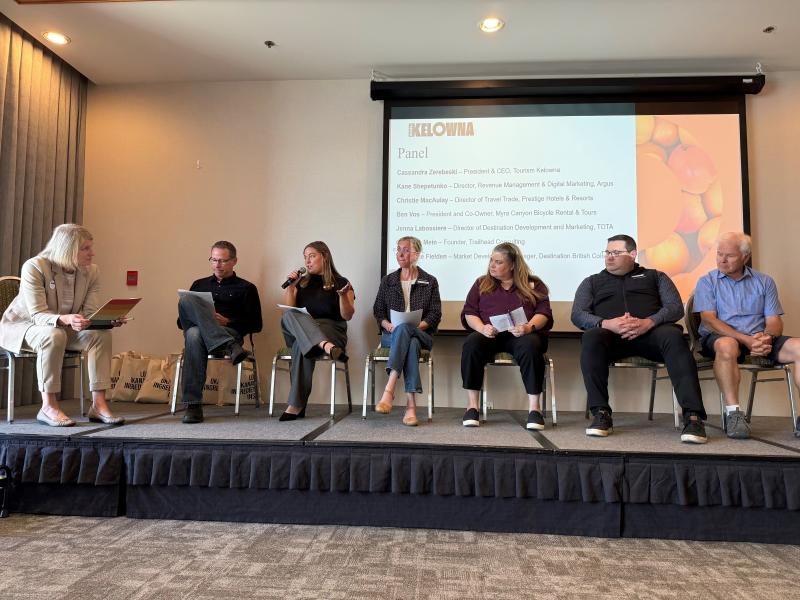
The afternoon concluded with a panel discussion moderated by Tourism Kelowna President & CEO Cassandra Zerebeski and featuring representatives from Argus Properties, Prestige Hotels & Resorts, Myra Canyon Bicycle Rental & Tours, TOTA, Trailhead Consulting, and Destination BC.
The discussion brought the concepts explored throughout the workshop into a local context, reinforcing that there is no single approach to travel trade and it may not be the right channel for every business. Success requires understanding your own capacity, margins, need periods, and business objectives before deciding where and how to participate.
For some businesses, travel trade can provide access to new markets, earlier bookings and shoulder-season demand. For others, the first step may simply be improving their product, pricing, sales materials or operational readiness before actively pursuing buyers.
Five Questions to Ask Before Getting Started
For businesses interested in exploring travel trade further, consider starting with these questions:
- Can I confidently provide pricing and availability well in advance?
- Is my experience easy for a buyer to understand, price, and book?
- Do I understand net rates, commissions, and the economics of the travel distribution system?
- Can I identify when I most need business and develop offers around those periods?
- Am I prepared to invest time in relationships—not just transactions?
Travel trade is not simply another marketing tactic. Done well, it can become a long-term distribution and sales strategy that connects Kelowna businesses with new customers, new markets and new opportunities.
Tourism Kelowna will continue working alongside TOTA, Destination BC, and our industry partners to help local businesses better understand the opportunity, build their readiness and connect with resources and market-development opportunities. Destination BC also offers ways for businesses to participate through travel trade co-ops, its Tourism Data Hub, BC Content Hub, Visiting Journalist Program, and other industry initiatives.
Interested in exploring travel trade for your business? Connect with me to discuss your readiness, learn more about available resources, and identify potential next steps.