Imagine yourself at the heart of Kelowna, captivated by the beauty and expansiveness of Okanagan Lake. The sounds of the waves lapping at the shore, intense on windy days and barely audible when the weather is calm. The refreshing feel of the water against your skin as you dive in on a hot day, or the spray that hits your face on a boating adventure. Whether you call Kelowna home, visit regularly, or find yourself in the region for the first time, there are so many activities centred around Okanagan Lake.
But, while we’re enjoying the water and all the fun it brings, we may not always take the time to consider Okanagan Lake and the waterways in our region as a living being, thinking about its spirit and all the contributions it provides.
To the syilx Okanagan people, these considerations are always top of mind. Coralee Miller, a member of Westbank First Nation, gifted storyteller, and docent at Sncewips Heritage Museum, explains that siwɬkʷ (water) is a relative that must be protected and one with whom the syilx Okanagan people interact on a personal level.
siwɬkʷ (water) is so central to life that the Okanagan National Alliance (ONA) endorsed the syilx Water Declaration in 2014. As noted on the ONA website, the declaration “serves as a living document on the Syilx relations and values to water…[it] communicates the importance of water and responsibilities we have as Syilx people.”
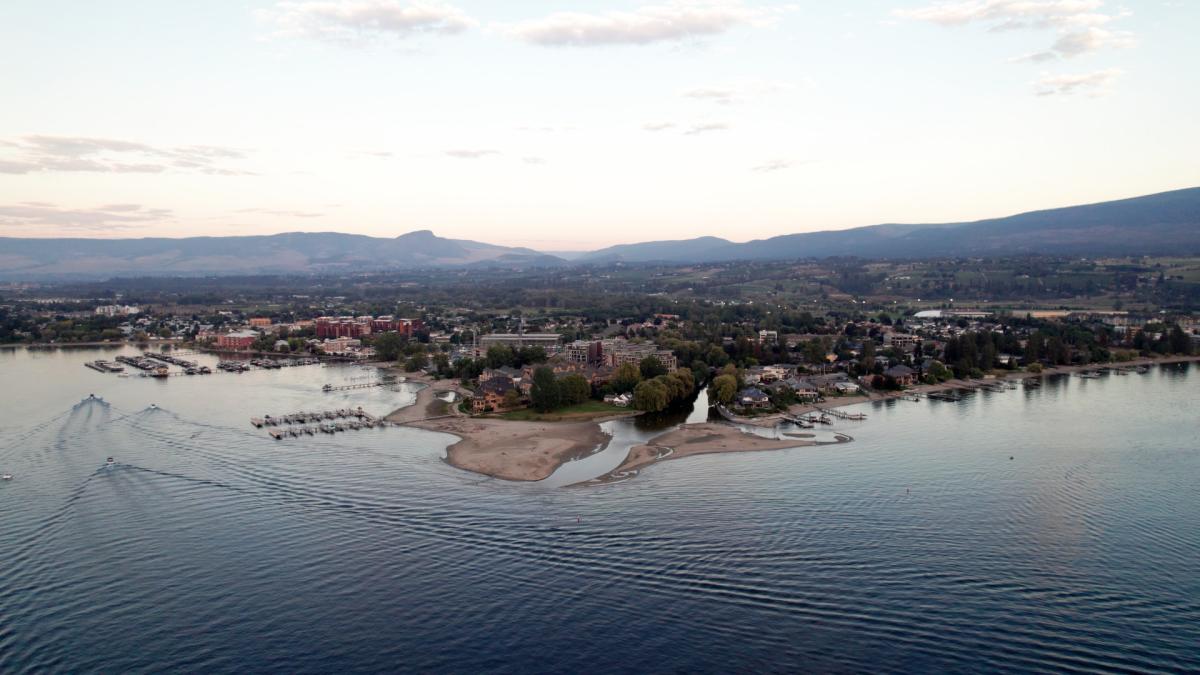
The mouth of Mission Creek Greenway, where it flows into Okanagan Lake. Image credit: ARK Media
“Water retains memory; it cleanses and heals. It is where we go to find peace, relaxation, medicine, and more,” says Coralee. “The lake is the lifeblood of our region, and the Okanagan is as beautiful as it is because of water.”
Through our discussion with Coralee, we learned that the true form of the spirit of the lake is water itself, while nx̌aʔx̌ʔitkʷ—sometimes incorrectly framed as the Indigenous word for Ogopogo—is the tangible form of the spirit. The story of nx̌aʔx̌ʔitkʷ is told through captikʷł, the collection of teachings which, as noted on the ONA website, are embedded in syilx Okanagan culture and language, and play a vital role in cultural renewal and revitalization.
Coralee explained how, when Indigenous communities and settlers first made contact, there were miscommunications about nx̌aʔx̌ʔitkʷ and the ceremonies the syilx people held for the spirit of the lake. Over time, these miscommunications led to the story of nx̌aʔx̌ʔitkʷ being appropriated, resulting in what we now know as Ogopogo. Coralee likens Ogopogo to a mascot rather than an accurate representation of nx̌aʔx̌ʔitkʷ. In fact, it wasn’t until the mid-1920s that the name ‘Ogopogo’ was even associated with the mysterious lake ‘monster,’ when it was pulled from a popular music hall tune from the time.
“Settlers sensationalized nx̌aʔx̌ʔitkʷ as a fantastical creature or dangerous monster,” notes Coralee. “In reality, nx̌aʔx̌ʔitkʷ is a tangible form of the spirit of the lake, showing up through stories as a being that’s dark in colour, with a serpent-like body, head like a horse, and antlers like a deer.”
The history of nx̌aʔx̌ʔitkʷ is one of the many stories that Coralee and her colleagues share with guests when they visit the Sncewips Heritage Museum. Coralee notes how it is crucial for the syilx Okanagan people to share their profound history, tell their own stories, and showcase the living Indigenous culture, which is so vibrant across the region.
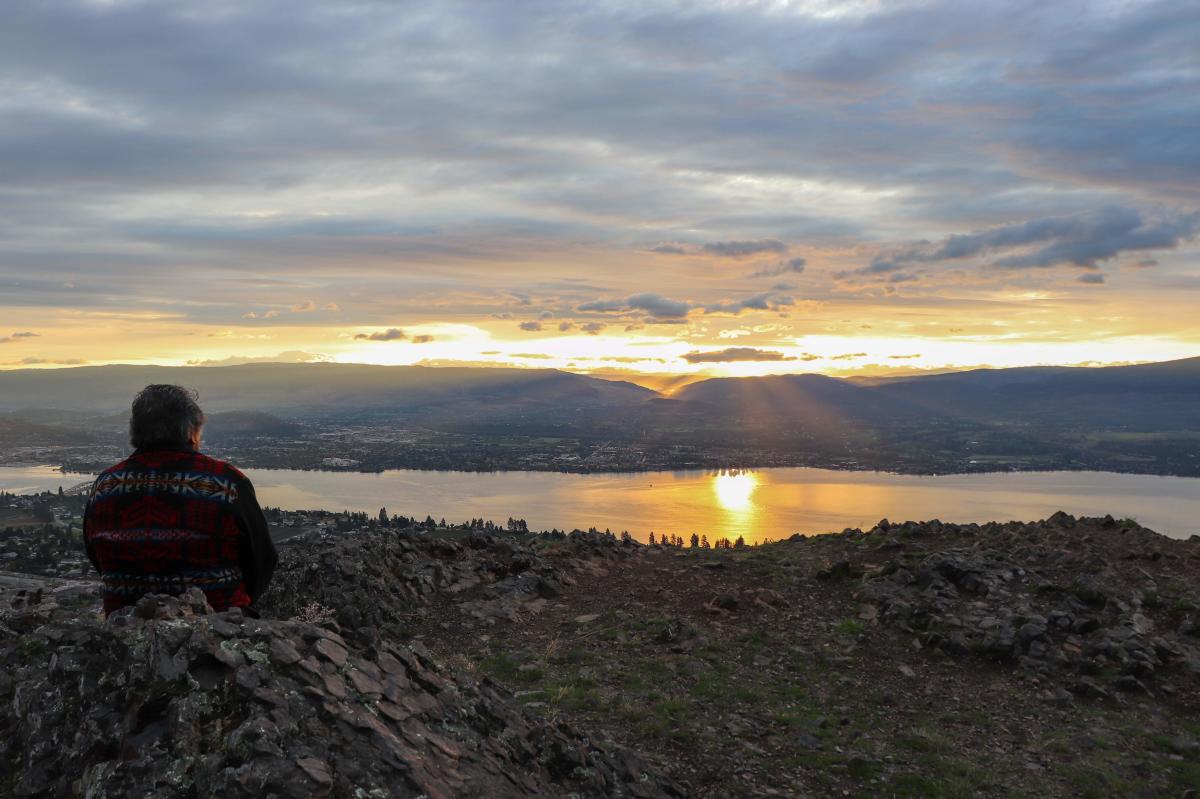
syilx Elder, Grouse Barnes, atop Mount Boucherie
In wrapping up our conversation about the spirit of the lake, Coralee left us with several important reminders, most notably that the lake is home to more than just humans and that we must take the time to consider what respect entails for the creatures that inhabit the water.
- Okanagan Lake and the waterways that feed into it are a sensitive ecosystem, particularly when it comes to spawning locations for local species like n̓tyʼtyix (salmon), which is one of the Four Food Chiefs and central to many of the syilx captikʷł . As such, it’s important to adhere to all regulations about where you can operate motorboats or where you can swim, to protect the zones closer to shore that are more vulnerable. Be sure to connect with the team at Sncewips or the Okanagan Nation Alliance for more information on vulnerable areas of the shoreline.
- Keeping invasive species out of Okanagan Lake is vital to maintaining balance in the ecosystem. While some invasive species have already made the lake their home, others, such as zebra and quagga mussels, have not been able to establish a foothold, thanks to the efforts of organizations like the Okanagan Basin Water Board and the Okanagan and Similkameen Invasive Species Society (OASISS), as well as the diligence of boaters. Visit the Don’t Move a Mussel website to learn more.
- As noted on the City of Kelowna website, several factors can impact water quality in the lake, including lake currents, runoff, creek outflow, changing environmental conditions, and the presence of waterfowl and animal waste. Some ways to protect the beach and help keep bacterial levels within acceptable limits include only taking your dogs to permitted beach locations, ensuring proper disposal of boat sewage, and not burying waste in the sand or leaving it on the beach. For more details on protecting the beach and yourself, visit the City of Kelowna website.
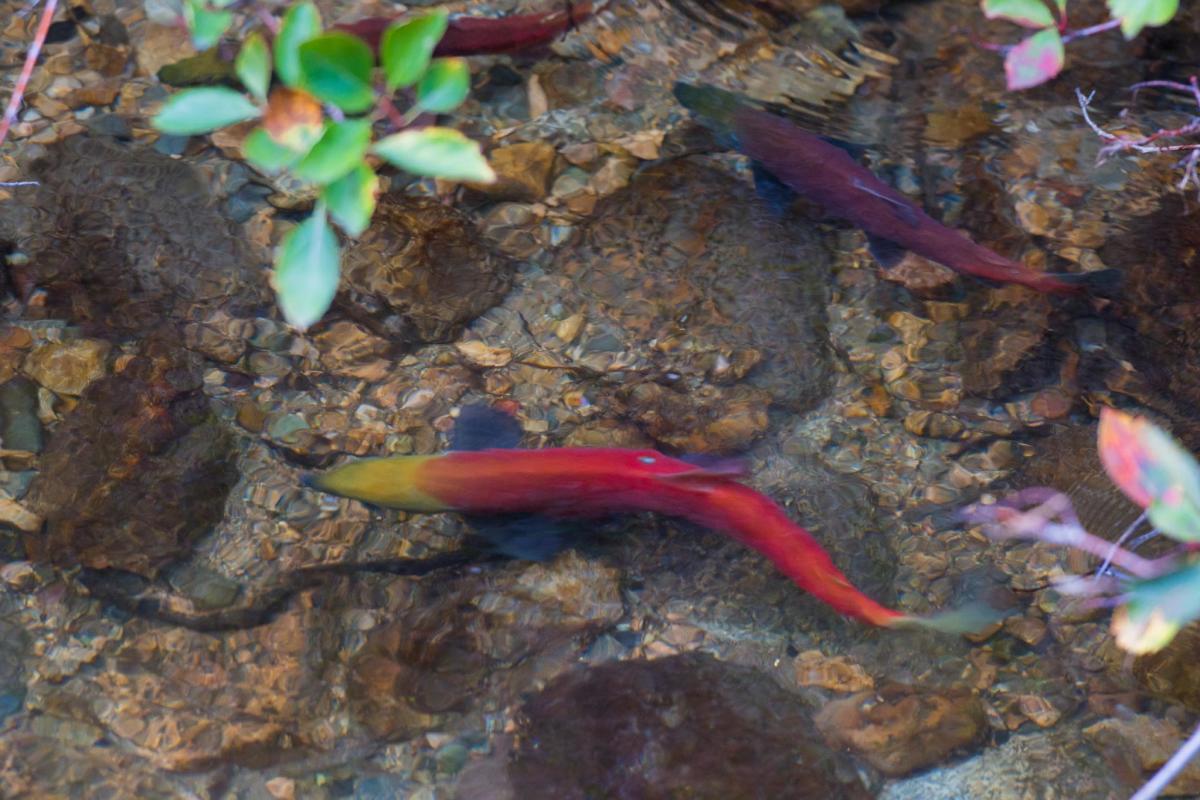
Kokanee Salmon at Hardy Falls Regional Park. Image credit: ©RDCO & Michael Hintringer
To learn more about the spirit of the lake, nx̌aʔx̌ʔitkʷ, and the importance of water to the syilx people, visit Sncewips Heritage Museum and the Okanagan Heritage Museum, explore the Okanagan Nation Alliance website and other links shared in this post, and watch Kelowna Museums Society's video, n̓x̌aʔx̌ʔitkʷ (Sacred Spirit of the Lake).