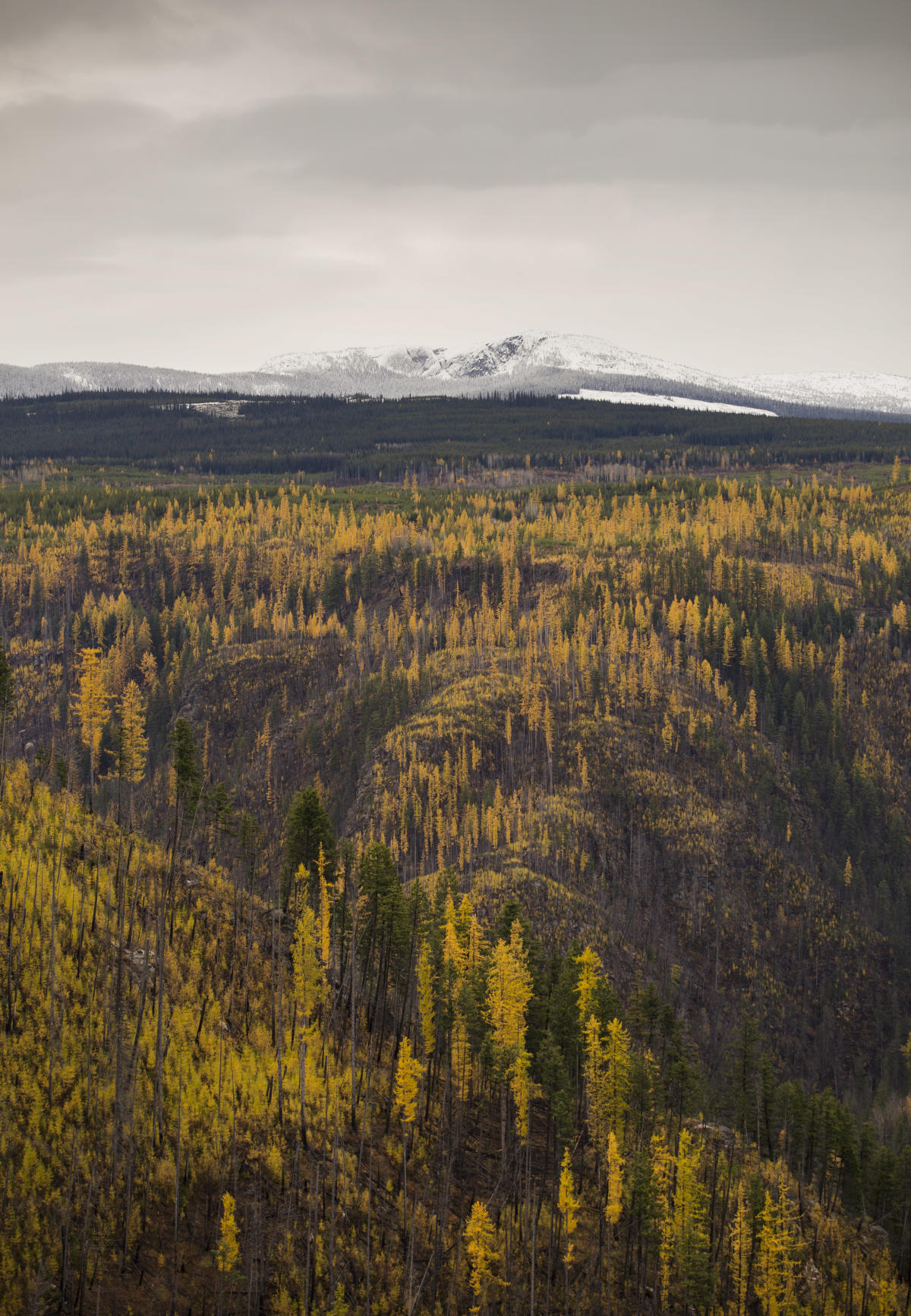
Every fall, high above Kelowna, the alpine larch trees put on a spectacular golden show. In October, hikers, cyclists, and photographers head into the hills above the city to catch it before the trees go bare for winter. The best places to see golden larches near Kelowna are the Boulderfields, Myra Canyon, and Oyama Lake, all within about an hour’s drive of Downtown Kelowna during the two-week larch season.
Larch Season in Kelowna: When and Where to Look
(1) Myra Canyon Trestles. Photo: Ken Hagen, (2) Myra Canyon Trestles. Photo: Ken Hagen, (3) Golden Larch. Photo: Matt Ferguson Photography
For those not in the know, alpine larches are one of only a few deciduous conifers. Like broadleaf trees such as aspen or ash, they turn a buttery yellow and shed their needles each autumn. Larches grow best at high altitudes in cold, dry climates, so to see them in Kelowna you have to gain a lot of elevation (they thrive over 1,200 metres/4,000 feet). Larch season is also short—to bask in their glory, you have about a two-week window in mid- to late-October when they're ablaze.
Just look up toward the hills behind Southeast Kelowna, where the Kettle Valley Rail Trail (KVR) cuts a path through the Okanagan Highlands, and if you see yellow in place of green, it's go-time. That two-week window shifts a little from year to year, but it typically falls somewhere between the second and fourth week of October.
Here are three of the best spots in the Okanagan Valley to take in larch madness, along with tips for planning your visit.
The Boulderfields: A Golden Scramble Above Kelowna
This gem of a spot is easy to miss unless you know where to look. The Boulderfields sits at the edge of Myra-Bellevue Provincial Park, where an ancient geological collapse left behind a sprawling field of stacked rocks. It's a well-known bouldering spot for climbers and adventurous hikers drawn to the sweeping views and the unusual geology of the rockfall. From the parking lot, follow the marked trail toward the rockfall. The trail opens onto a view of golden larch trees filling the valley below.
The upper section of the trail is well-defined and easy to follow, but it winds and narrows the deeper you go into the boulders, so it's worth keeping track of your route as you explore. Wear proper hiking boots, since the ground is uneven and loose in places. For those wanting to make a weekend of it, there's a free recreation site nearby with pit toilets and backcountry campsites, which are first-come, first-served.
- How to Get There: From Chute Lake Road in Kelowna, follow Gillard Forest Service Road south for about 8.7 km, then turn onto the Kettle Valley Rail Trail heading east for roughly 1.9 km before turning north onto the access road for the final 0.7 km. The drive takes about 20 minutes, and the road turns to gravel and dirt along the way. It's manageable in a standard car, though an all-wheel-drive vehicle is recommended during the shoulder seasons of early April and late October. Get directions here.
- Parking: There's an upper parking area at the 10.6 km mark, or you can continue about 1 km further down to the main lower lot.
- Gear: Proper hiking boots are a must, since the ground underfoot is uneven and loose in places.
- Cell service: Spotty to non-existent once you're in the main parking and climbing area, since the site sits in a forested, rocky basin below the ridge. Worth downloading maps or letting someone know your plans before you head up.
Myra Canyon: Easy Trestle Views of Larch Season
Every fall, the Myra Canyon portion of the Kettle Valley Rail Trail is one of the best places to hike or bike over 18 train trestles and through two tunnels on the city's most famous walking and cycling trail. In mid-October, the larch trees on the hillsides surrounding the canyon turn from green to gold. Benches along the route are placed for views of the canyon, Okanagan Lake, and Kelowna below, and are good spots to stop for photos during peak season.
The gravel path stretches 12 km one way between Myra and Ruth Stations, or 24 km round trip, with a gentle grade that suits most fitness levels and ages. Cyclists typically complete the full ride in two to three hours, while hikers can expect three to four hours at a relaxed pace. For a shorter outing, a walk to the first few trestles and back makes an easy option for families or casual visitors. On foot, it's about an hour each way to reach trestle No. 8 through the second tunnel, a distance of roughly 3 km. Either way, the views make it worth the trip.
Myra Canyon is open year-round, though the trail is busiest from May to October. During the warmer months, bike and e-bike rentals, guided tours, and shuttle service are all available through Myra Canyon Bicycle Rentals & Tours until mid-October. Once winter sets in, the trail is also popular for snowshoeing and fat biking, though the access road may require a 4x4 vehicle and amenities become limited.
- How to Get There: Myra Canyon has two main access points: Myra Station, the main entrance via McCulloch Road and Myra Forest Service Road, or Ruth Station via June Springs Road. Get directions to Myra Canyon Parking Station or directions to Ruth Station.
- Parking: Both Myra Station and Ruth Station have parking lots and pit toilets, but no food or water, so come prepared.
- Gear: The trail is flat, but it's gravel underfoot, so runners with a good sole are a better choice than casual shoes. Dress in layers, since the weather can turn quickly at this elevation.
- Cell service: Very poor and unreliable throughout Myra Canyon, so it's worth letting someone know your plans before you head out.
Oyama Lake: A Peaceful Larch Getaway in Lake Country
In Lake Country, drive up Oyama Lake Road past the Oyama Zipline Forest Adventure to Oyama Lake. This 800-acre volcanic lake is known for the 27 islands dotting its surface and the trout swimming beneath it, and sits at just the right altitude for larch trees to flourish.
The High Rim Trail, which runs 55 km between Kalamalka Lake in Vernon and Mission Creek in Kelowna, intersects Oyama Lake Road, making this a convenient access point for hiking, biking, and exploring the surrounding larches and backcountry. Access the trail at kilometre 40.5, where Oyama Lake Road meets the Oyama Lake Forest Service Road, then hike north to the Chatterton Lake Lookout or Damer Lake Lookout, a one-way distance of about 3 to 4 km.
Heading south instead takes you past Hayhurst Lake and Dave's Viewpoint to The Monolith, a glacial erratic and a popular day hike for its views of the Okanagan Valley and Oyama Lake below, just a three-km hike each way. Or stroll the short trails around the lake from Oyama Lake Eco Lodge. You can also camp at Oyama Lake's free recreation camping sites.
- How to Get There: From Middle Bench Road, turn east onto Todd Road and continue for 0.7 km. Turn right onto Oyama Lake Road and follow it for 9.2 km, then bear right onto the Oyama Lake Resort Forest Service Road for the final 2.8 km to reach the lake. Get directions to Oyama Lake Recreation Sites.
- Parking: Day-use parking and a cartop boat launch are located directly at the entrance of the Oyama Lake Recreation Site.
- Gear: Dress in layers, since conditions at this elevation can shift quickly, and wear sturdy footwear suited to the trail you're planning, whether that's the short lakeside strolls or a longer stretch of the High Rim Trail.
- Cell service: Coverage depends on your provider, but it's best to prepare to be out of range.
Planning Tips for Larch Season
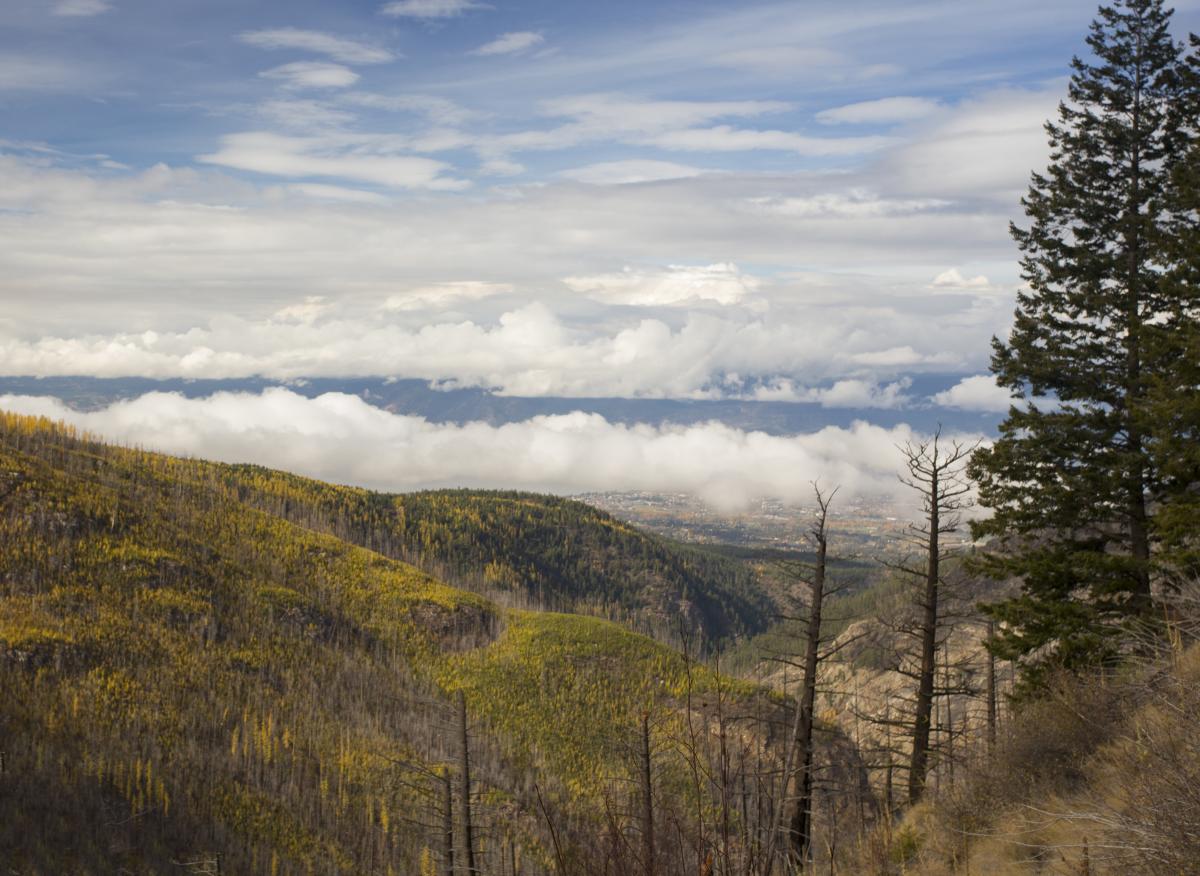
Photo: Matt Ferguson Photography
- Time it right. Larch season around Kelowna typically peaks in the last two weeks of October, though the exact window shifts from year to year with the weather.
- Know before you go. Weather and road conditions can shift quickly at higher elevations once fall sets in, so it's worth checking both before heading out.
- Dress in layers. Elevations above 1,200 metres are noticeably colder and windier, even on a mild fall day.
- Fuel up first. There are no services at the Boulderfields, Myra Canyon, or Oyama Lake, so bring water and snacks before you head up.
Extend Your Experience
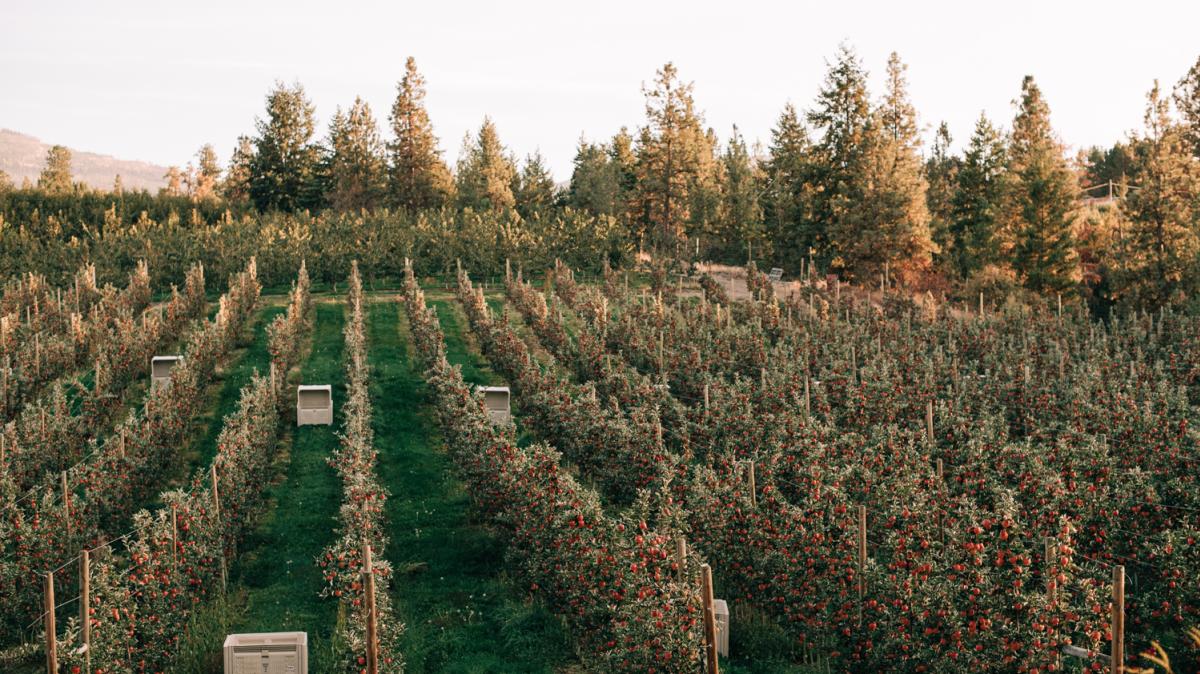
Larch season overlaps with harvest season in the Okanagan, giving visitors plenty of reasons to extend a day in the hills into a full taste of fall in the valley. Kelowna's food and argiculture scene is in full swing through October: wineries across the valley are pouring new vintages and crushing recently harvested grapes, farms and orchards open their gates for apple u-picking, and weekend farmers markets are stocked with the season's harvest. Several local restaurants also mark the season with harvest-inspired menus and dinners, making a larch hike an easy excuse for a fall food trip. To extend your stay and take advantage of fall hiking and larch spotting, check out accommodations from hotels and resorts to short-term rentals and more.
Chasing Gold Before It's Gone
Golden larch season is brief, but it's one of the most rewarding times of year to get outside near Kelowna. Whether it's a short walk to a viewpoint at the Boulderfields, an easy ride through Myra Canyon, or a quieter hike around Oyama Lake, each spot offers its own way to take in the colour. The gold only lasts a couple of weeks, so it's worth building a trip around it while it lasts.
Frequently Asked Questions (FAQs)
Where can I see golden larches near Kelowna?
The Boulderfields, Myra Canyon, and Oyama Lake are three of the most accessible spots, each offering a different way to take in the colour, from an easy trestle walk to a backcountry hike. All three sit above 1,200 metres, the elevation where larches thrive, so expect to gain some elevation to reach them.
When do the larches turn gold near Kelowna?
Alpine larches usually turn from green to gold in the last two weeks of October, though the exact timing shifts from year to year with the weather.
Do I have to hike to see the larches?
Not necessarily. The viewpoint at the Boulderfields and the trail at Myra Canyon are both reachable with minimal walking, though exploring further into any of the three locations means more time on foot.
How long does larch season last?
The colour show lasts about two weeks, so it's worth keeping an eye on conditions in early October to time a visit.