October is a season of bounty and gratitude, marking the final stretch of the Okanagan harvest as teams at local farms, orchards, and vineyards gather the produce they've nurtured all season. This bounty reflects generations of stewardship by the syilx / Okanagan people and respect for the land, their traditional, unceded territory, that shapes Kelowna's culinary identity.
At this time of year, observances like World Food Day (October 16) and International Chefs Day (October 20) also offer an opportunity to collectively recognize our agricultural and culinary communities, who work the land and transform local ingredients to keep our fields and plates full.
In 2026, October 31 will mark the one-year anniversary of Kelowna's designation as Canada's first and only UNESCO City of Gastronomy. As this anniversary approaches, it's the perfect time to showcase the exceptionally close connection between the land and the table—the journey from seed to plate—that you'll find in the Okanagan Valley.
Honouring the Land: The Foundation of Kelowna's Culinary Ecosystem
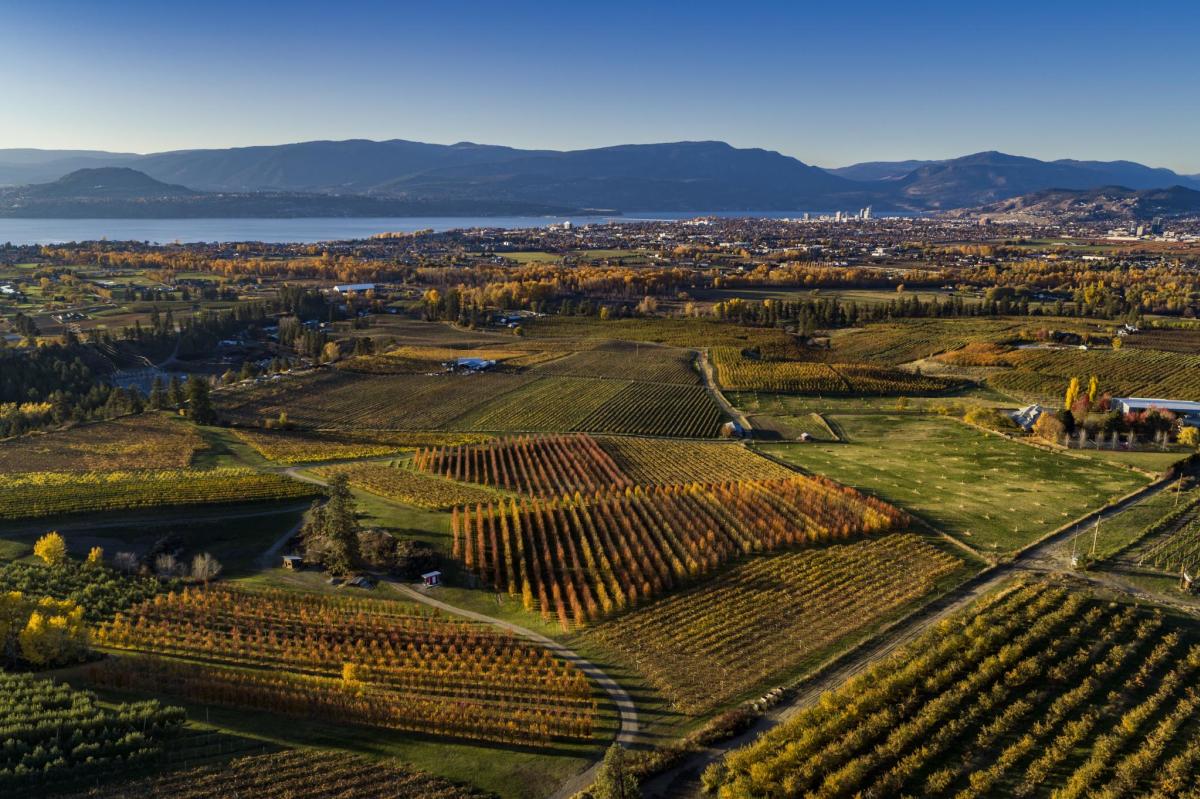
Southeast Kelowna in the fall. Photo: Shawn Talbot Photography
Food and drink are interwoven into Kelowna’s entire ecosystem, and that connection underpins the City of Gastronomy designation. The region’s agricultural depth, sustainable practices, community collaboration, and respect for Indigenous knowledge come together to create the abundance synonymous with the Okanagan Valley.
While agriculture in the area took root nearly two hundred years ago, with the planting of the first apple trees in 1859, the natural environment and generations of Indigenous stewardship allowed the region to flourish. Kelowna's bounty also results from its semi-arid climate, combined with the moderating effects of Okanagan Lake and typically mild winters, which provide ideal growing conditions for tree fruits, wine grapes, field vegetables, and other crops.
Today, agricultural land makes up a significant portion of Kelowna and its surrounding communities, with much of it protected through British Columbia’s Agricultural Land Reserve. Through the dedication of hardworking farmers, orchardists, viticulturists, and many others in the agricultural sector, the land, water, and sun nurture the seasonal harvests we’ve come to know and love.
Planting Seeds and Harvesting Local Ingredients: Food Systems in Action


(1) Jas Sanghera of Don-O-Ray Farm Market. Photo: ARK Media House, (2) Dave Paterson of Tantalus Vineyards. Photo: Tamsin Carriere & Tantalus Vineyards
“I love being a farmer in the Okanagan; it’s a great experience,” says Jas Sanghera, Owner and Operator of Don-O-Ray Farms. “The connection with the soil is very important to me…It’s rewarding for me as a farmer [to know] that mostly all of my produce gets sold right here in Kelowna.”
Jas and his family have been operating Don-O-Ray Farms for more than 20 years, though the local business has been around since the 1960s. Driven by the family's passion for agriculture and community, the farm and its market, which carries an array of locally made products alongside fresh produce, are beloved by locals and visitors alike.
Always looking to diversify his crops and try new things, Jas works closely with the local chefs who buy his produce, ensuring what he grows matches what they want to serve.
Alongside the region's hundreds of farms, orchards, and markets, there are also more than 40 wineries operating in and around Kelowna. Viticulturists and winemakers work together to make the most of the land, producing internationally acclaimed, award-winning wines paired with plates full of local ingredients.
Perched above Okanagan Lake, Tantalus Vineyards was established in 2004 on one of British Columbia's oldest continuously producing vineyards, with table grapes first planted on the land in the late 1920s. Regenerative agriculture and a soil-first approach to farming are central to the Tantalus team's work. This approach also includes housing beehives from nearby Arlo’s Honey Farm on the winery's land.
“We’re trying to farm one large biodiverse environment…bees are very important for that, for pollinating all sorts of other species around, for benefitting the surrounding environment,” explains Winemaker & General Manager, David Paterson. “So, while we’re growing grapes and making wine, we’re also planting lots of different cover crops throughout our soil profile, trying to build up our organic matter through regenerative agriculture, and all those practices need bees. We’ve planted all our landscaping with different species that flower at different times, specifically to feed the bees throughout the year on the property.”
These collaborative, mutually beneficial relationships between farms, vineyards, restaurants, and so many other agriculture- and culinary-based businesses are part of what makes Kelowna and its surrounding communities unique. Because the region has a relatively small footprint, the food on your plate and the drink in your glass are typically grown or produced very close to where you enjoy them.
Gathering at the Table: Sharing a Taste of Kelowna with the World
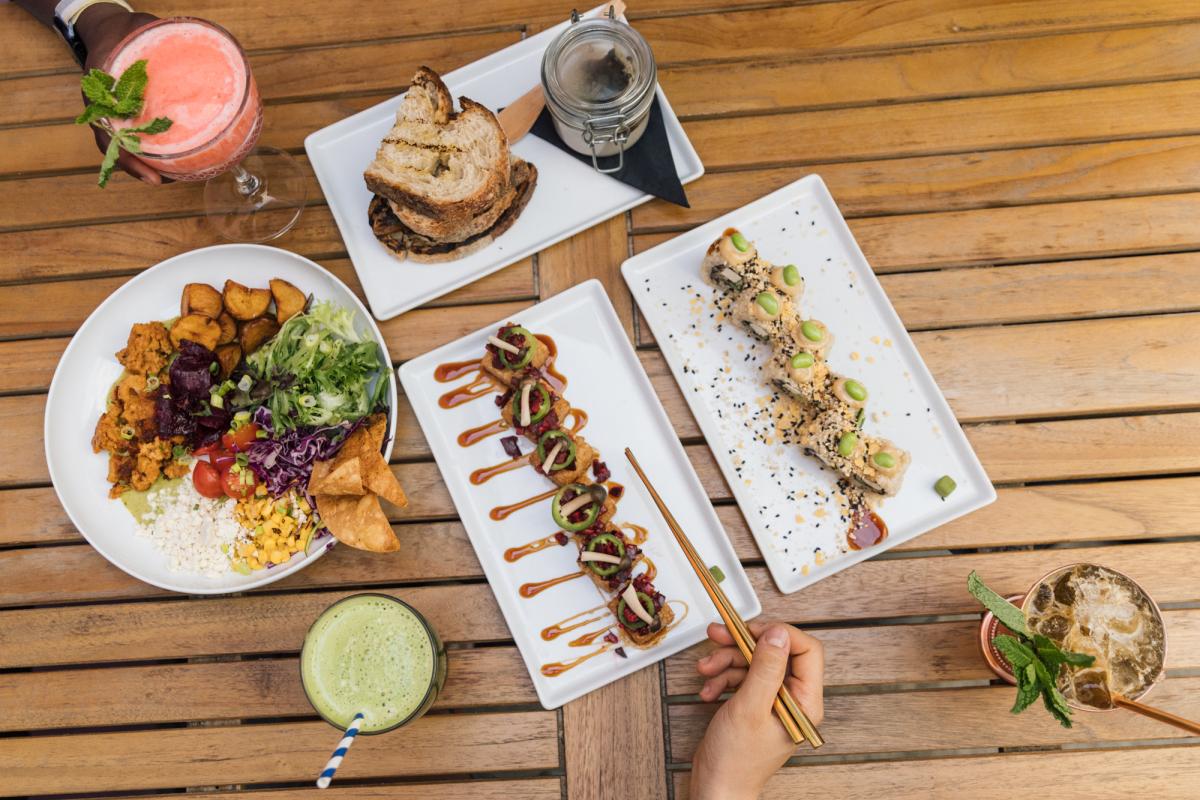
Plates of food at Frankie We Salute You! Photo: BC Ale Trail & Norma Ibarra
“A lot of times, there is a bit of a disconnect between the food that’s on your plate and where it came from,” says Brian Skinner, Proprietor & Executive Chef at Frankie We Salute You! “Because we celebrate local and plant-based food, we have the opportunity to reflect what’s happening in the vineyards, on the farms, in the apiaries, and bring that to the plate through pairing different things that work together.”
This celebration of local ingredients at Frankie We Salute You! extends to many of the farm-to-table restaurants in and around Kelowna. Produce harvested mere minutes away shapes the dishes chefs create throughout the year, reflecting agriculture’s cyclical nature, which starts with the first seeds planted in the land.
“I firmly believe [the Okanagan has] the best produce in Canada,” Brian adds. “If we are centred in this place, it’s our duty as chefs and stewards of this land to really appreciate what’s grown here and try to do our best to bring that into the conversation of restaurants, how people dine, what they experience, and hopefully, what they can turn into habits of what they are eating by going to the farmer’s market and picking up more local products.”
If you're exploring Kelowna this October, you'll easily see these agricultural and culinary elements in action, savouring the best of the region and gaining first-hand experiences that showcase why the city was designated as Canada's first UNESCO City of Gastronomy.